What it means to create architecture with legacy in mind
When most people think about building a home that “lasts,” they imagine strong materials and solid construction. While those things are essential, true longevity begins at a deeper level.
At J Christopher Architecture, we believe that a lasting home is one that evolves with the people who live in it. It’s not just about durability. We design with adaptability, dignity, and enduring beauty in mind. A well-considered home can serve one generation with elegance and then gracefully transition to support the next.
 Whether you’re planning a new custom home or reimagining an existing space, here are three key strategies to help your home stand the test of time:
1. Flexible Layouts That Evolve With You
The way we use our homes changes over time. A design that allows for that change is one that will continue to serve you well.
A guest suite today might later become a private space for an aging parent. A home office could transform into a nursery, or later into a hobby room or den. By designing spaces with multiple future uses in mind, you’re not just planning for today—you’re investing in long-term comfort and usability.
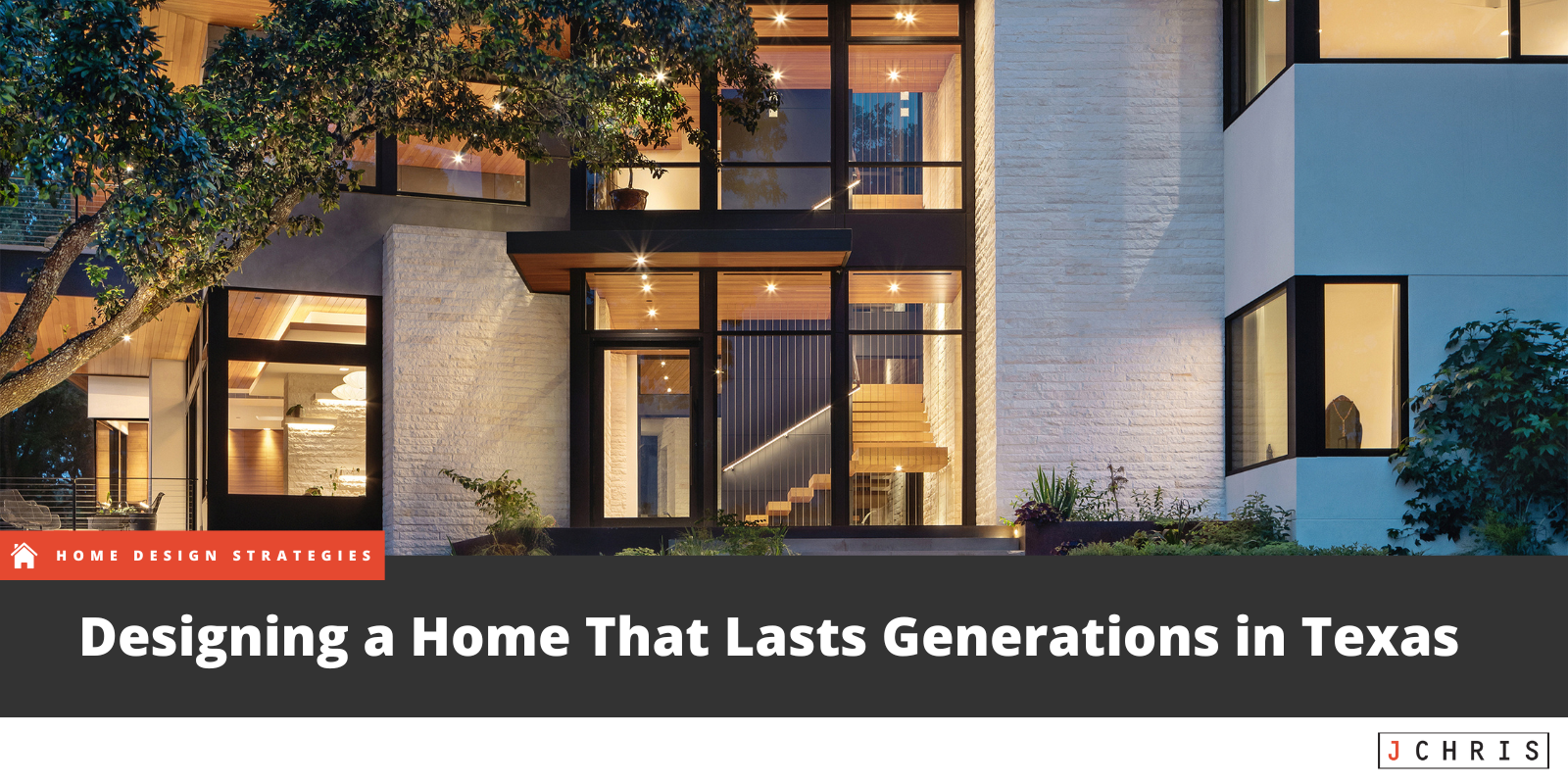
At JCA, we often work with families to identify areas where adaptability can be subtly built in from the start, avoiding costly renovations later while supporting family transitions over time. The Cove House demonstrates this principle: with four distinct bedroom suites and their dedicated baths thoughtfully separated and centered around public living areas and decks, it was designed to allow each current family member, as well as future generations to have both privacy and connection.
 2. Universal Design Principles for All Ages and Abilities

Incorporating universal design doesn’t mean sacrificing beauty. On the contrary, thoughtful accessibility can elevate a home’s sense of ease and flow.
Designing with features like wider doorways, step-free entries, and accessible bathrooms helps ensure that your home is welcoming and functional for everyone, from young children to aging grandparents and guests with mobility challenges.
These details not only support multigenerational living but also protect your investment by increasing your home’s appeal to future buyers who value livable, inclusive design. A great example is the Cove House’s central elevator, subtly concealed within a textured architectural column around which a floating staircase ascends — proof that accessibility can be seamlessly woven into elegant design.
3. Materials That Stand the Test of Time
Timeless homes are built with timeless materials. Investing in quality materials early reduces the need for constant upkeep and ensures the home ages gracefully.
That means considering features such as engineered foundations, high-performance cladding, and durable finishes that can withstand the Texas heat, storms, and seasonal fluctuations.  These choices aren’t just practical—they also contribute to the home’s visual longevity, as beauty that endures is often rooted in craftsmanship that holds up under pressure. At the Cove House, durable finishes and expansive windows frame layered decks overlooking a Central Texas landscape — a design built to weather generations while remaining timelessly modern.
We help clients select materials that reflect their aesthetic while supporting long-term performance—so your home remains just as inspiring in 20 years as it was on day one.
Design for the Future, Grounded in the Present
Designing a home that lasts is about more than bricks and mortar. It’s about intention. It’s about creating a space that carries your values forward, serving your family with grace through each new chapter.
At J Christopher Architecture, we believe the best homes are those that reflect not only who you are, but who you’re becoming. By combining architectural foresight with deeply personal collaboration, we help our clients create homes that are as enduring as the stories they hold.
Explore our process and discover how we design with longevity in mind: Services – J Christopher Architecture.
Frequently Asked Questions About Designing A Home That Lasts Generations
What does it mean to design a “generational” home?
A generational home is designed to serve multiple life stages or family generations over time. This includes flexible floor plans, accessibility features, and durable materials that support long-term use without requiring major renovations.
How do I future-proof my home’s layout?
Future-proofing begins with identifying rooms that can serve multiple purposes. For example, a guest suite can later become a parent’s private quarters as they age. Including wide doorways, minimal steps, and adaptable spaces can help your home grow with you.
Why is universal design important, even if I don’t need it now?
Universal design makes your home more accessible to people of all ages and abilities. Features like step-free entries, lever-style handles, and wider hallways can make daily living easier now—and far more comfortable in the future, whether for you or visiting family.
What types of materials last the longest in Texas climates?
Durable materials, such as stone, stucco, steel, and concrete, paired with engineered wood and/or UV-resistant finishes, hold up well in Texas weather. We also recommend selecting high-quality windows and weather-sealed exterior finishes to reduce maintenance over time.
Can I incorporate flexible design principles into a remodel?
Yes. While it’s easier to include these features in new construction, thoughtful remodeling can introduce flexible layouts and universal design elements. We often help clients upgrade existing homes for long-term use without losing their original character.