
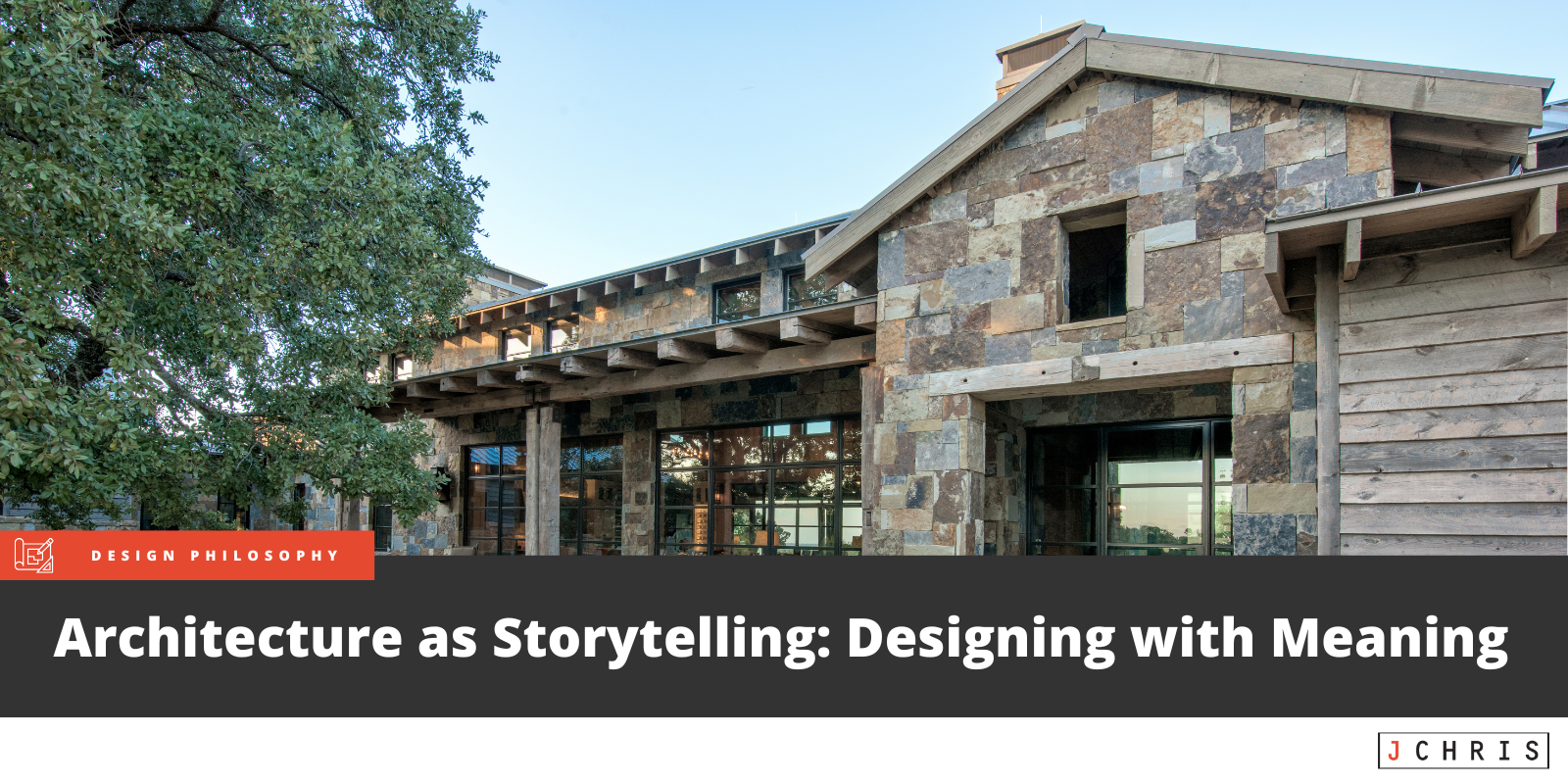
How thoughtful design transforms space into narrative
Great architecture is more than structure—it carries meaning, reflects history, and invites interpretation. Every design choice, from the way a building interacts with its surroundings to the way light moves through its rooms, contributes to an unspoken dialogue between the architecture and those who experience it. Like a story unfolding chapter by chapter, design reveals layers of memory, culture, and emotion.
Here are key ways architects craft a narrative through design:
1. Sense of Place: Creating Connection with Context
A building’s placement shapes its relationship to its surroundings—both natural and cultural. Thoughtful integration allows a home to feel like it belongs to the land, echoing its landscape, climate, and community. In contrast, bold architectural gestures can deliberately stand apart, making a statement that calls attention to the design itself. Either approach is storytelling: one rooted in harmony, the other in distinction. The key lies in intention.
2. Designed for People: Spaces That Foster Belonging
Architecture is most meaningful when it feels lived in and loved. Spaces that anticipate human needs, whether for comfort, gathering, reflection, or connection, create a sense of belonging. Materials that feel inviting to the touch, seating that encourages conversation, and spaces that foster both privacy and togetherness are all tools architects use to craft environments where people feel at home.
3. Intentional Spatial Flow: Guiding Movement and Emotion
The journey through a home is part of its story. How one moves from a sheltered entryway into an open living area, or from a private bedroom into an expansive outdoor view, shapes the emotional experience of a place. Thresholds, transitions, and changes in scale guide that journey. By carefully orchestrating these moments, architects can create spaces that feel calm, dramatic, inspiring—or all three.
4. Rooted in Research: Honoring History and Purpose
Every site has a story before the first foundation is poured. Understanding the land’s ecology, the site’s history, and the cultural context adds depth to design. At the same time, listening to a client’s needs and aspirations ensures that the architecture feels personal and purposeful. This dual approach, research plus responsiveness, creates authenticity, grounding the home in both place and story.
5. Emotional Impact: The Power of Atmosphere
Architecture isn’t just seen—it’s felt. The play of light across textured walls, the proportions of a room, or the shift between indoor and outdoor spaces can all shape mood and memory. A well-designed home doesn’t stop at functionality; it resonates emotionally. It inspires comfort, awe, nostalgia, or joy, depending on how the story is told through form, material, and space.
Architecture as a Living Story
At J Christopher Architecture, we believe architecture should tell your story, not just exist as a structure. Through collaboration, insight, and expertise, we craft spaces that reflect your aspirations, experiences, and personal narrative. The result is a home that feels not only functional and beautiful, but deeply meaningful.
Learn more about how we design with meaning: https://www.jchristopherarchitecture.com/services.
FAQ: Architecture as Storytelling
What does it mean to say architecture is storytelling?
It means that buildings do more than provide shelter—they convey meaning, memory, and emotion through form, material, and spatial experience.
How do architects design with meaning?
Architects use context, research, spatial flow, and personal details from the client’s story to shape a design that feels authentic and emotionally resonant.
Why is storytelling important in architecture?
Storytelling helps create spaces that feel rooted, personal, and enduring. It transforms architecture from a functional structure into a meaningful place of connection.
Can storytelling in design make a home more valuable?
Yes. Homes that reflect thoughtful design and emotional resonance often stand out, offering not only practical value but also a lasting sense of identity and belonging.