
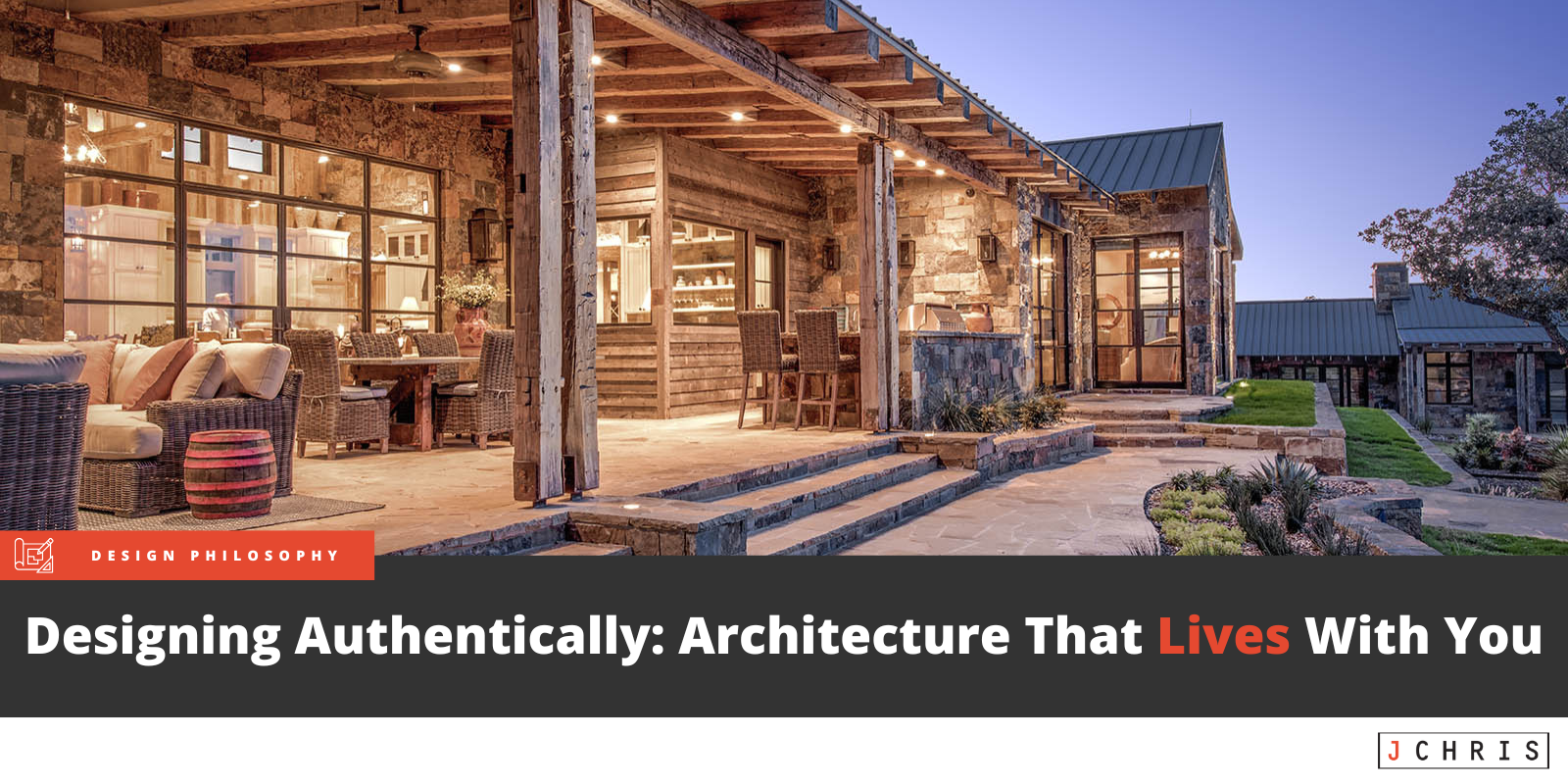
There is a difference between a home that performs and a home that postures.
In an era where visuals often overshadow substance, we remain committed to designing houses that feel real: deeply rooted, human-scaled, and built for the way people truly live. A home should feel natural on day one and even better in year ten. That kind of longevity requires clarity, restraint, and a willingness to prioritize integrity over trends.
Authentic design begins with listening. Every family has its own story and rhythms—how they gather, decompress, cook, host, rest, and reconnect. Architecture should reflect those patterns, not impose new ones. We look for ways to create spaces that breathe with the lives inside them: light that shifts quietly throughout the day, sightlines that encourage connection, materials that age gracefully, and details that serve function first and aesthetics second.
When a home is authentic, you can feel it immediately. There’s a sense of ease, as if the walls understand what they’re there to do. Each room has purpose. Nothing is arbitrary. Nothing shouts for attention. Instead, the architecture supports the people who inhabit it, holding their story and giving them space to grow their lives within it.
Authenticity isn’t a style. It’s a commitment: to honesty, to storied craft, and to the quiet confidence of well-considered design.
Frequently Asked Questions About Authentic Residential Design
What makes a home design feel authentic?
Authentic design begins with understanding the people who will live in the home. Rather than following trends, it responds to daily routines, personal values, and the unique characteristics of the home’s site.
Is authentic residential design a particular architectural style?
No. Authenticity is not a style. A home can be modern, traditional, contemporary, or transitional while still feeling authentic. What matters is whether the design reflects the people who inhabit it.
Why do some homes feel timeless while others feel dated?
Timeless homes are often grounded in purpose rather than fashion. They prioritize proportion, material quality, natural light, and functionality, allowing them to remain relevant long after design trends have changed.
How does architecture support daily life?
Architecture shapes how people move through a home, interact with one another, and experience comfort throughout the day. Thoughtful design supports these activities naturally rather than forcing them into predetermined patterns.
Can a custom home reflect a family’s story?
Yes. Through careful listening and collaboration, architects can incorporate a family’s traditions, priorities, and lifestyle into the design, creating a home that feels personal and meaningful.
Why is listening important in the design process?
Good design begins with understanding. Listening helps architects uncover needs, aspirations, and patterns of living that may not be obvious at first, resulting in a home that serves its occupants more thoughtfully.