
Thoughtful design supports everyday interaction, shared moments, and the rhythms of family life
Architecture influences how we relate to each other far more than most people realize. The way rooms flow, the way light moves, and the way sound carries all affect how families interact and experience daily life together.
A home designed for connection doesn’t just bring people into the same space; it nurtures how they feel while they’re there. It encourages conversation at breakfast, laughter during dinner, curiosity during quiet moments, and comfort during long nights. The architecture becomes a partner in the emotional life of the family.
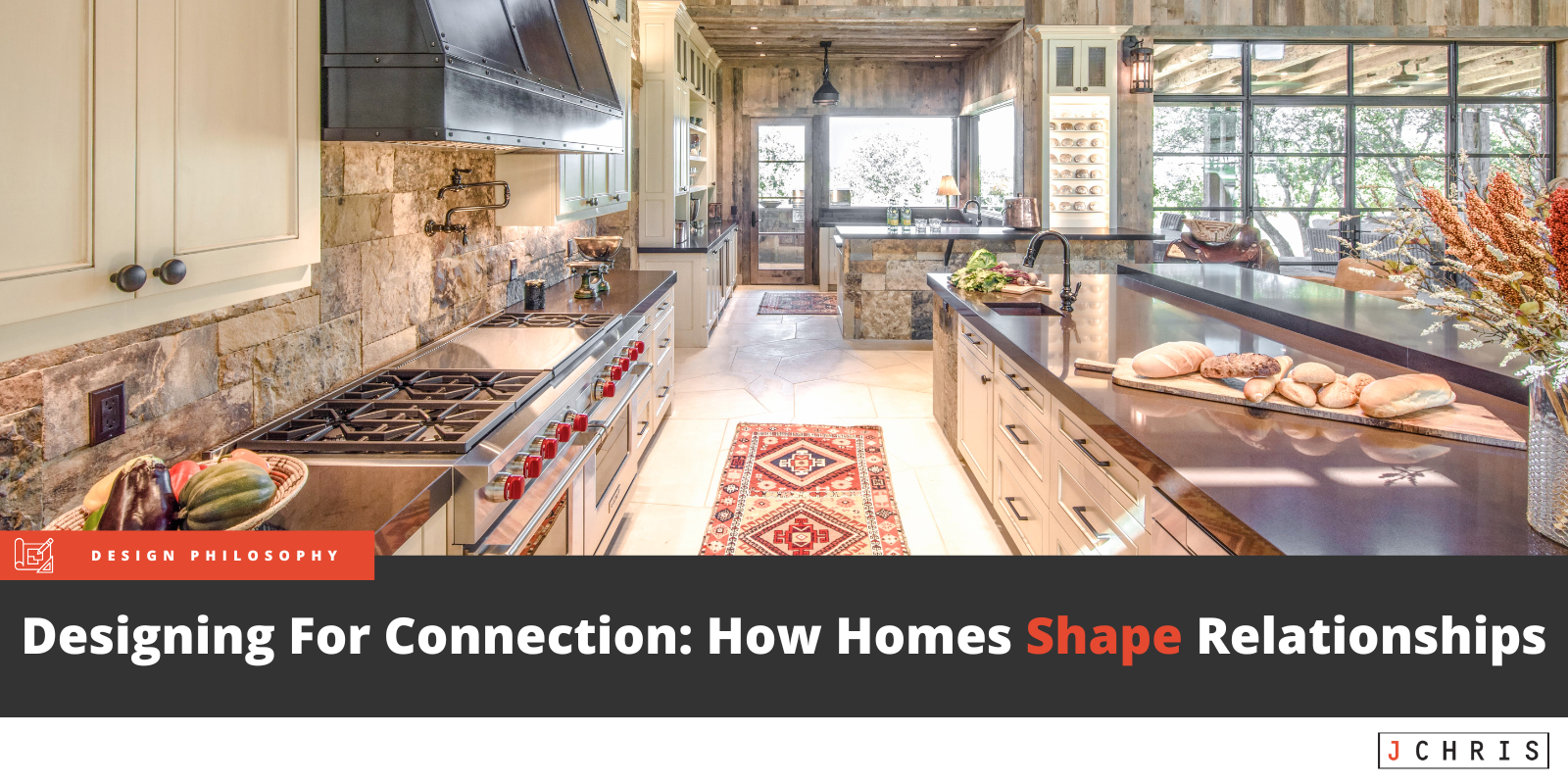
This starts with intentional adjacencies: the kitchen that anchors the home, the dining room that feels inviting rather than formal, and the living areas that allow people to be together without crowding one another. It continues with subtle details, warm materials, natural light, framed views, niches for quiet thought, and gathering spots that feel meaningful rather than obligatory.
We also consider how connection evolves over time. Children grow. Parents age. Families host holidays, milestones, and unexpected moments. The home’s architecture should support these transitions gracefully, offering spaces that adapt without losing their sense of place.
A well-designed home supports relationships the same way a trusted friend does — gently, consistently, and without pretense.
Frequently Asked Questions About Designing Homes for Connection
How does architecture influence relationships at home?
Architecture shapes how people move, gather, and interact within a space. Layout, light, acoustics, and proximity all influence how often and how comfortably people connect in daily life.
What design features encourage connection in a home?
Open yet defined living areas, kitchens that serve as central gathering points, inviting dining spaces, and comfortable shared rooms all encourage natural interaction while still allowing for personal space.
Can a home balance connection and privacy?
Yes. Thoughtful design allows for both. Well-placed transitions, secondary living areas, and quiet retreats provide space for privacy while maintaining strong connections in shared areas.
Why is natural light important for connection?
Natural light creates warmth, comfort, and a sense of openness. It helps spaces feel inviting and encourages people to gather and spend time together.
How does design adapt as families grow and change?
Flexible layouts, multipurpose rooms, and adaptable spaces allow a home to evolve alongside its occupants, supporting different stages of life without requiring major changes.
What role does material selection play in connection?
Warm, tactile materials such as wood, stone, and natural textures create a sense of comfort and familiarity, helping spaces feel more welcoming and supportive of interaction.